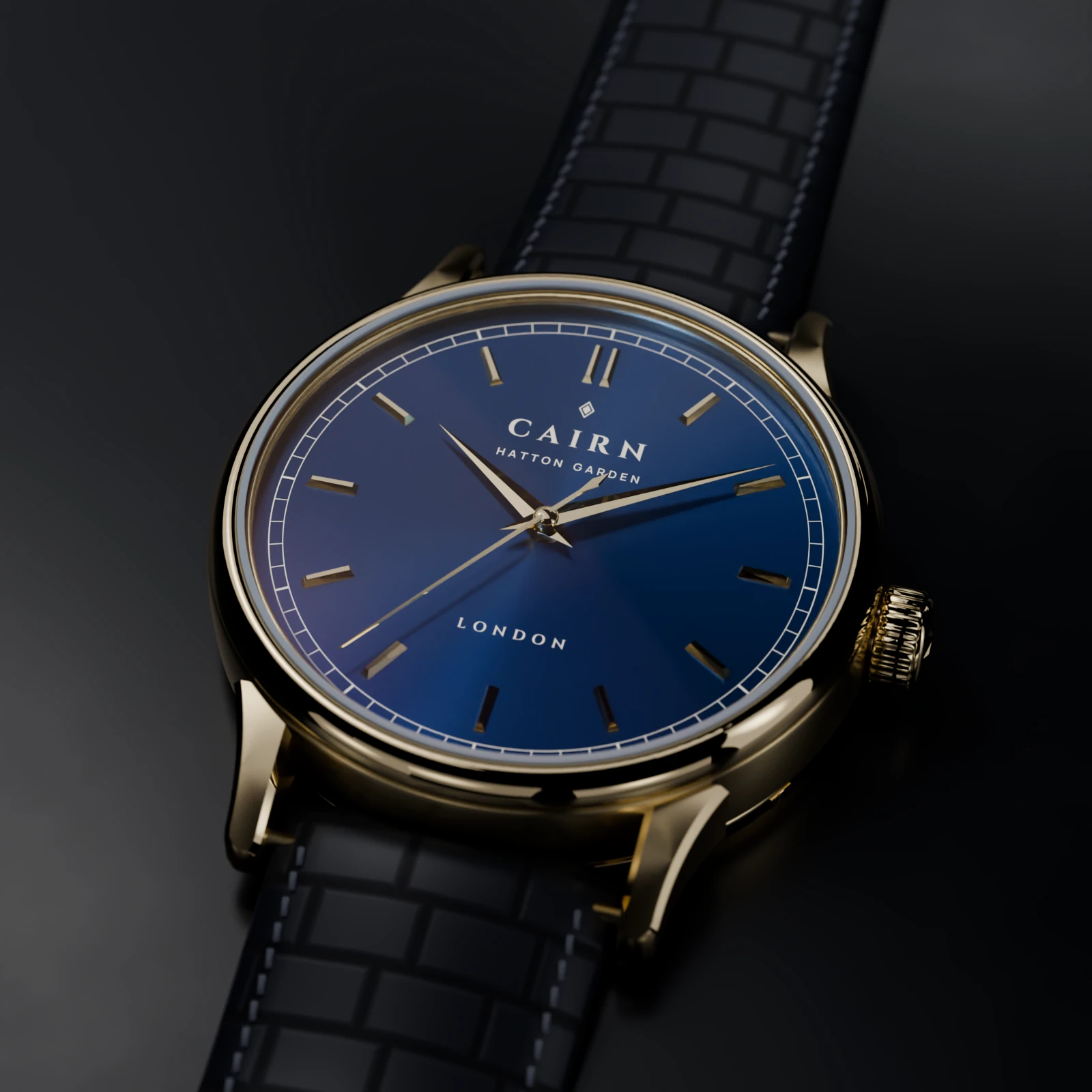
Trig
18ct Yellow Gold39.0 mm Time-Only No-Date Automatic
- Case
- Ø 39.00 × 10.35 mm
- Lug to lug
- 46.50 mm
- Calibre
- LJP-G101
- Setting
- Plain bezel
£32,000UK midpoint incl. VAT · £28,000–£36,000 range
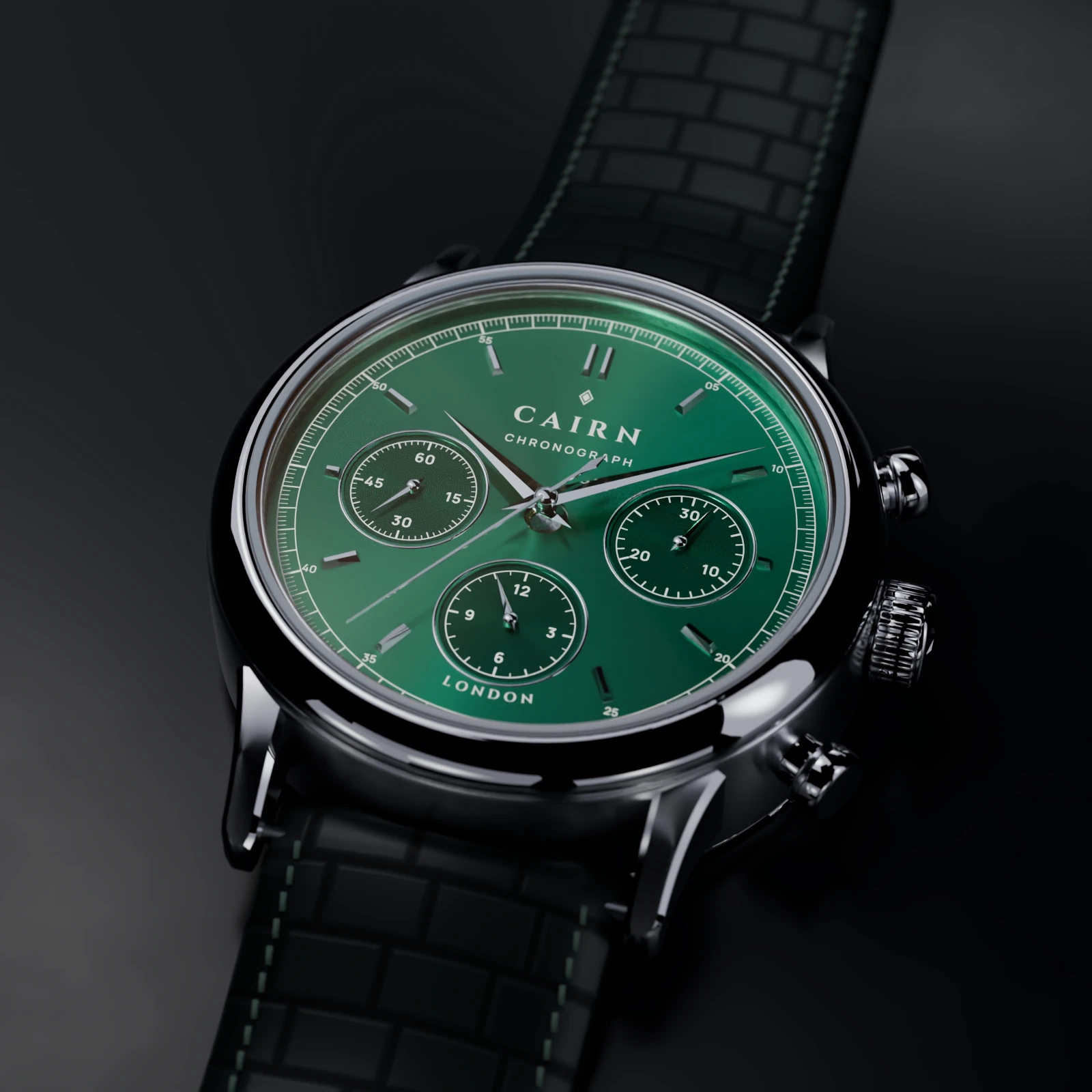
Hatton Garden · London
A column-wheel chronograph with three recessed registers and a Highland emerald dial.
The collection salon
39.0 mm Time-Only No-Date Automatic
£32,000UK midpoint incl. VAT · £28,000–£36,000 range
41.5 mm Column-Wheel Tricompax Chronograph
£54,000UK midpoint incl. VAT · £48,000–£60,000 range
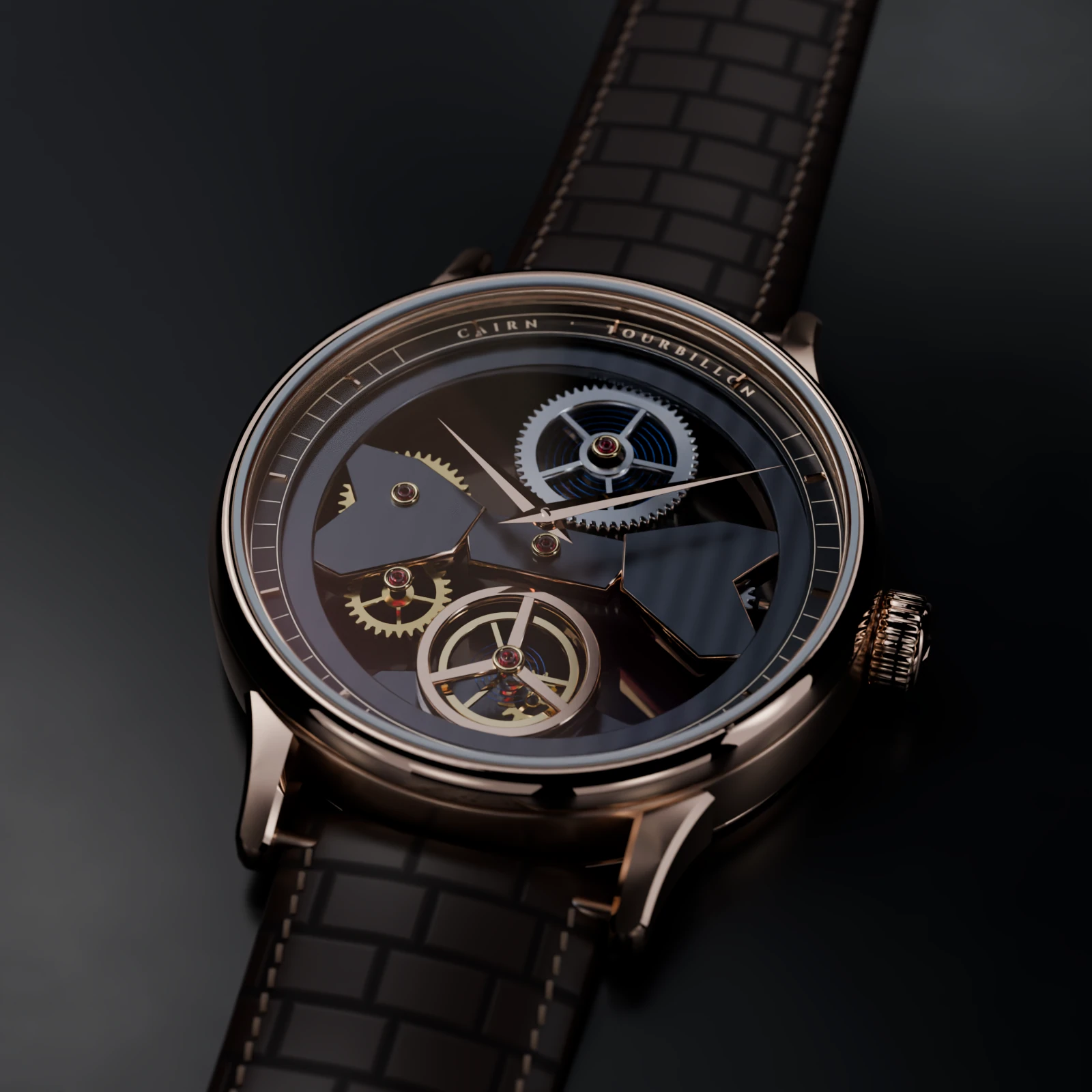
41.0 mm Openworked Cantilevered Flying Tourbillon
£70,000UK midpoint incl. VAT · £62,000–£78,000 range
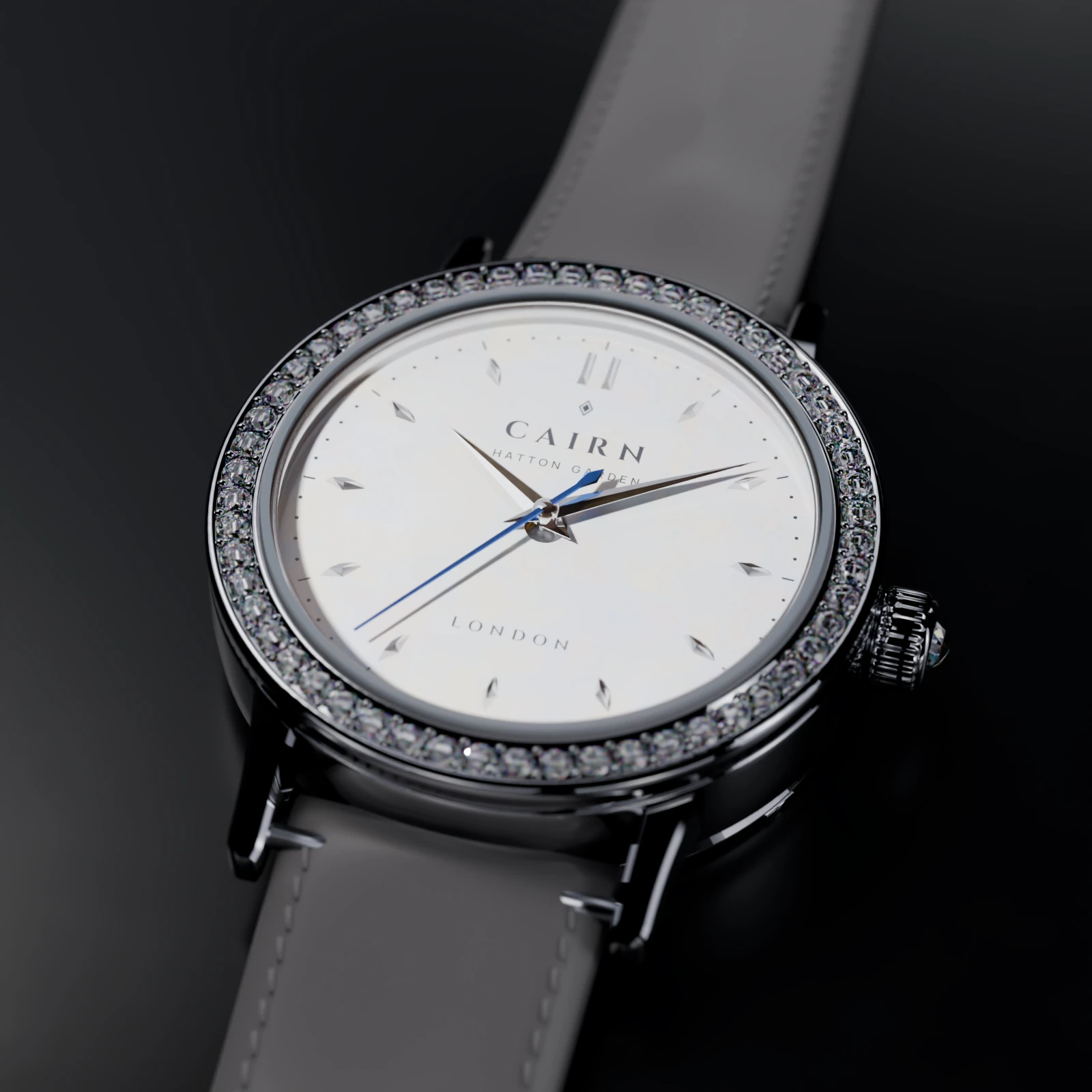
28.0 mm Petite Daily Automatic Scalloped Micro-Pavé
£24,250UK midpoint incl. VAT · £22,000–£26,500 range
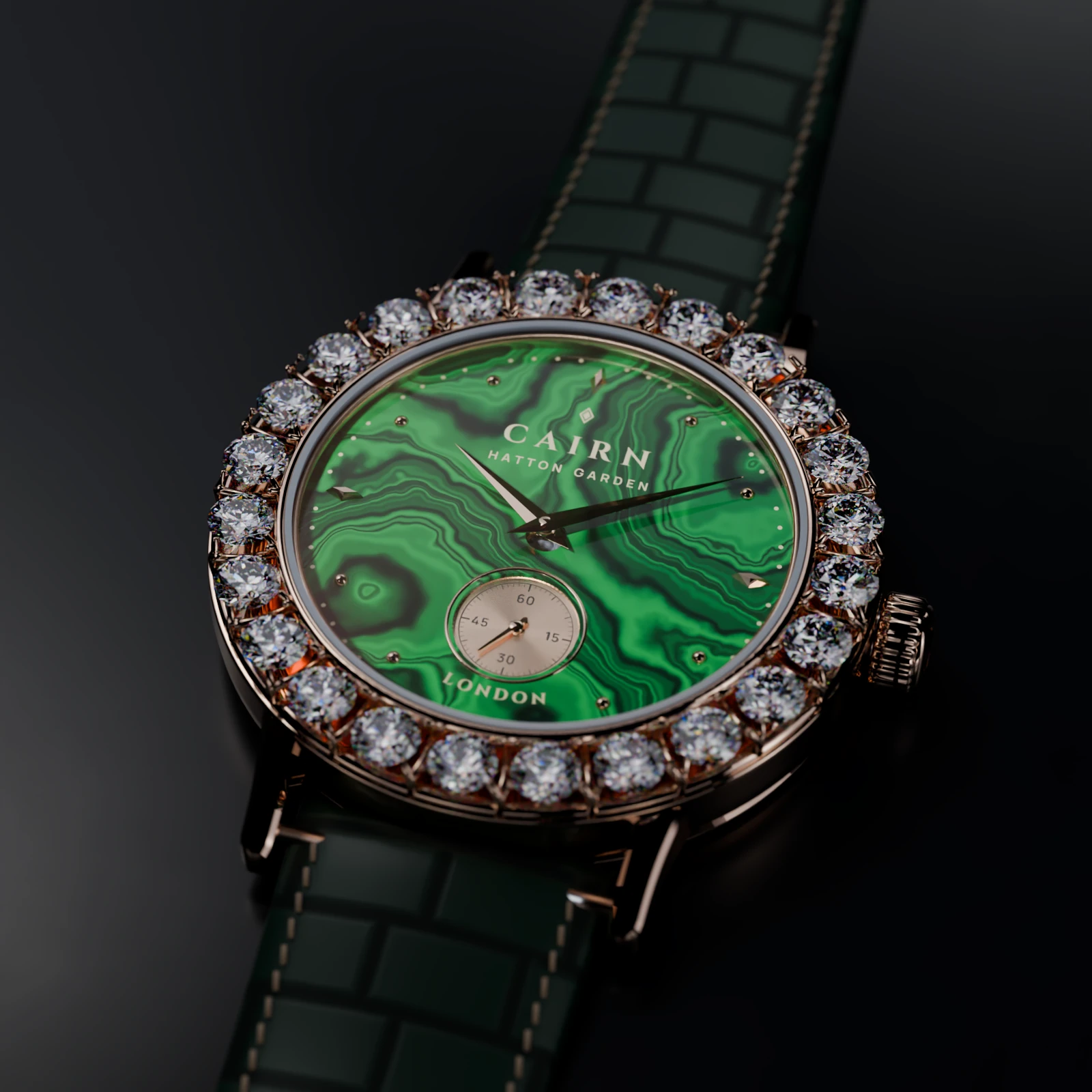
31.0 mm Ultra-Thin Open-Gallery V-Claw Crown-Set Manual
£35,250UK midpoint incl. VAT · £32,000–£38,500 range
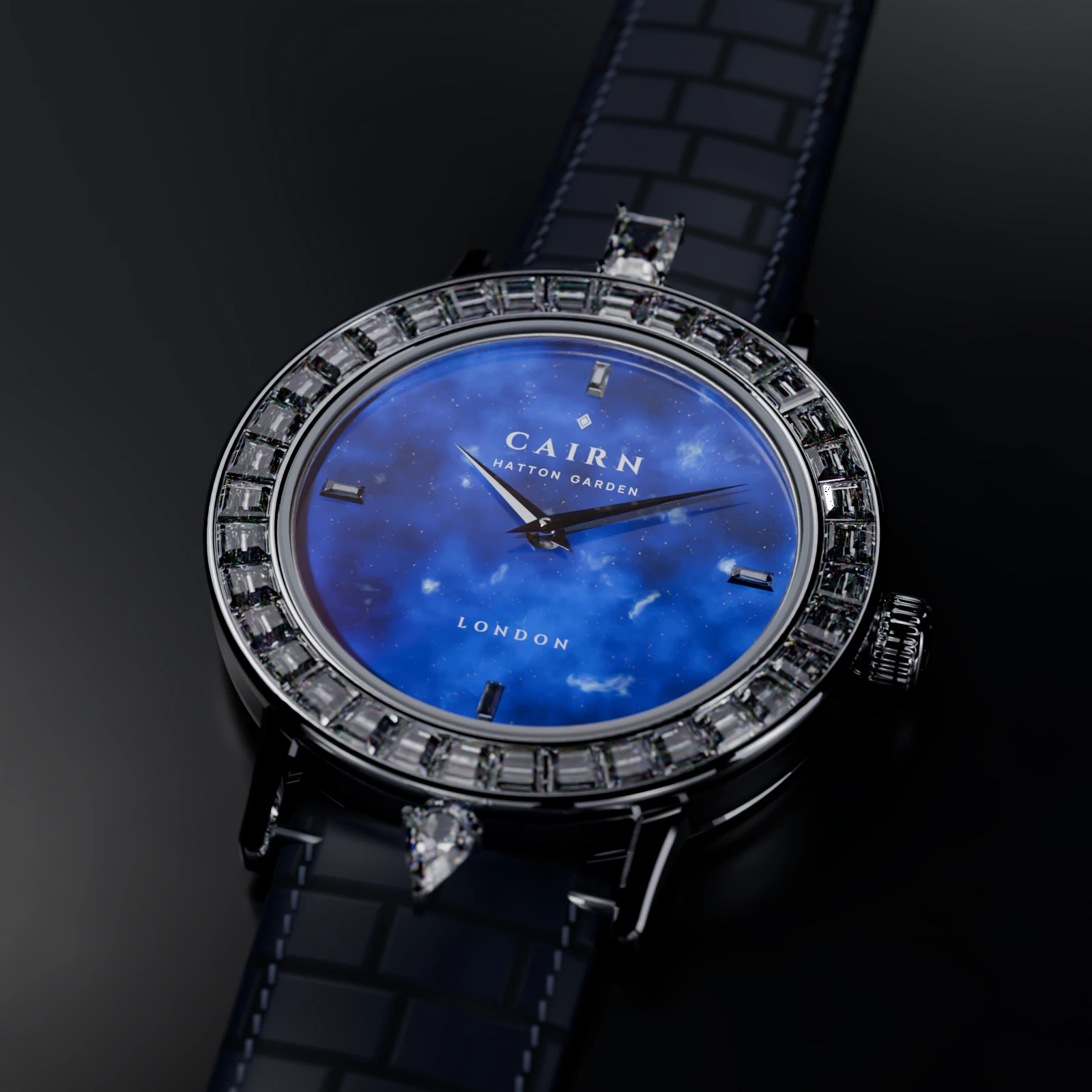
32.5 mm Tapered Baguette & Toi et Moi Two-Hand Halo
£56,500UK midpoint incl. VAT · £51,000–£62,000 range
LJP-G101 (68h auto, 34.00 x 9.85 mm, 41.0 L2L, 17 mm lugs, 2.639 cm³ — shares 100% G101 spares/inventory with Men's Trig 39)
SELLITA-SW300-1b (56h auto, 34.00 x 8.80 mm, 2.349 cm³)
56 x 1.30 mm F-G VVS = 0.50 ct (PCD 30.60 mm, 0.42 mm gap).
Indicative UK retail with diamond bezel, including VAT. 18ct gold £30,750 · Platinum 950 £34,750.
The mechanical studio
Material studies
Waymark
November 2026 model · ten monobloc cases. Retail midpoint and range include VAT.
Silver 925 is too ductile for this claw design. Tarnish can darken the stone pavilions. For a bespoke tantalum case, specify a Platinum 950 or 18ct rose-gold bezel. The precious bezel carries the hallmark and + METAL. The distinct case is engraved TANTALUM.
Case construction
A solid outer shell slides over a sealed Grade 5 titanium capsule. The crown and pusher tubes pass through channels open to the rear.
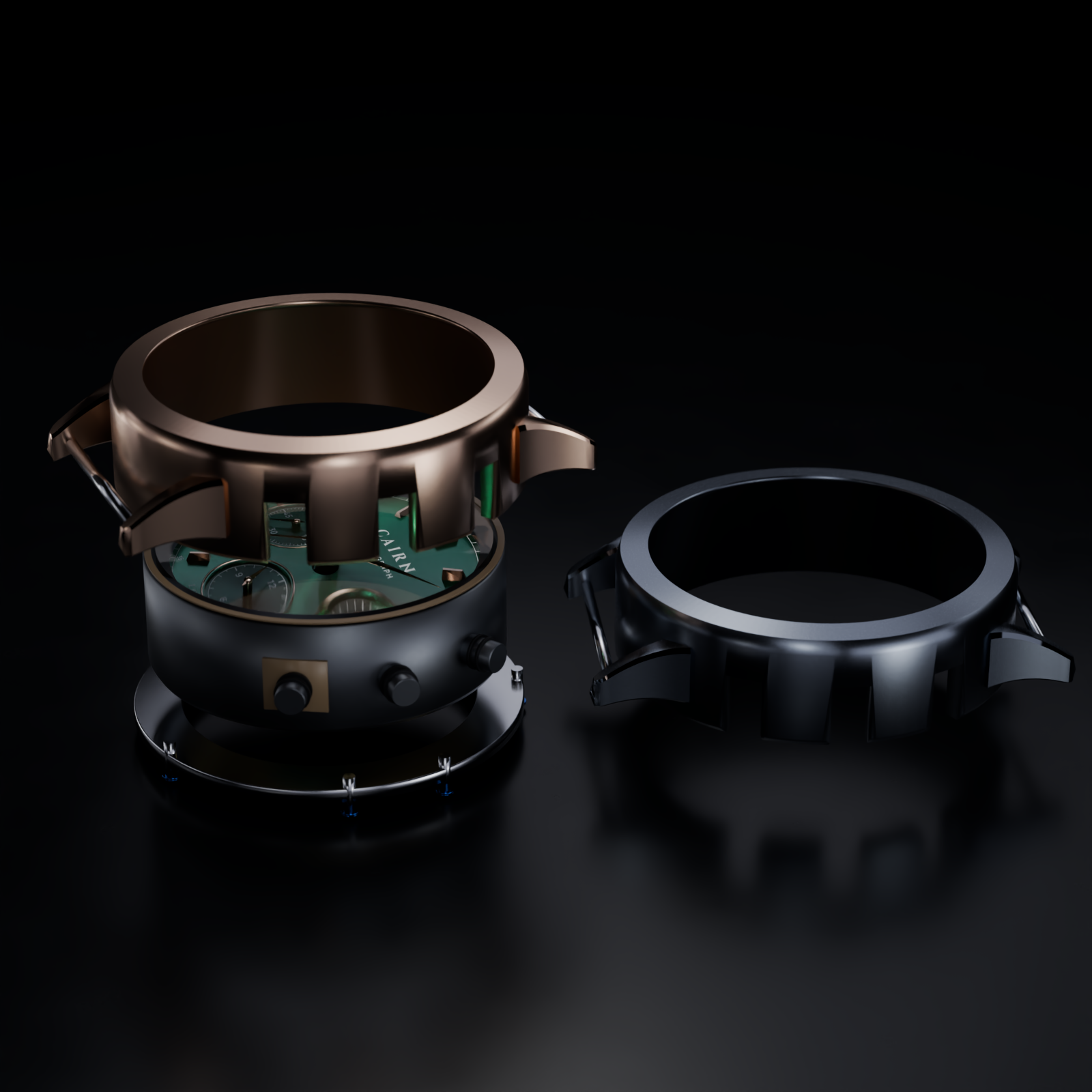
The Waymark capsule measures Ø36.80 mm. Its 3.90 mm open keyways clear the tubes. Recessed PEEK isolation pads maintain a 0.15 mm radial gap.
Submit the precious shell separately for assay. Section 5 of the Hallmarking Act 1973 governs subsequent alterations to hallmarked articles. The production plan calls for written London Assay Office clearance before mating. On an assembly classified as mixed metal, specify + METAL beside the hallmark on the precious part and identify the core as TITANIUM. Assay approval is pending.
Before and after · CGI lab
Drag the dividing line to compare the early AI-morphed artwork with the geometry-built study. Open each check to inspect the detail.
0 of 11 reviewed
Face the dial to inspect the motion works. Look through the exhibition back for the L112 column wheel, clutch, hammers and rotor, or the split bridges of the D100.
From the Waymark hand axis, the nine and three o’clock centres sit at X −8.20 and +8.20 mm. The six o’clock centre sits at Y −8.00 mm. Each register is 8.40 mm across.
Count three central hands and three separate register hands on Waymark. On separation, each register hand lifts along its own pinion.
Inspect the centre at X 0, Y 0. Read LONDON at six. The back inscription reads LONDON CASED · SWISS CALIBRE.
On Tor, sight through the 10.80 mm cage at six, centred at Y −8.40 mm. Its bearing sits below the cage, leaving the opening clear above.
Trig, Waymark and Tarn use threaded backs with six spanner notches. Tor, Isla and Alba use six recessed flange screws.
Follow the crystal gasket, minute flange, dial feet, movement seat, casing ring and two clamps. Trace the control tubes and rear Viton seal.
Check Waymark’s pushers at ±30° to the stem, all at Z −3.00 mm. The working pusher stroke ends against an internal stop at 1.40 mm.
Centre bores measure 2.00 mm on Trig, 2.60 on Waymark, 1.70 on Tarn and 1.80 on Isla and Alba. The stone-to-gasket wall is 0.475 mm on Tarn and Isla, 0.600 mm on Alba.
Allow the decorated movement’s specified height tolerance. On Isla, the 0.25 mm recessed gold disc clears the D100’s fixed 0.40 mm small-seconds pinion.
Follow the open keyways past the control tubes to the recessed PEEK pads. Inspect the six flange screws, the shell hallmark position and the base-metal identification.
CAIRN DIAMONDS LONDON
Master watch CGI brief · v2.2 (Tri-Model Consensus) · November 2026

1. Work from canonical-6watch-specs.json, version 2.1.0-gate1-patched. Record the calibre, case envelope, flange and casing bores, stem height, register centres, dial bore, stone-to-gasket wall and single caseback fixing. Datum A is the movement dial seat. Use millimetres, +X at three, +Y at twelve and +Z towards the crystal. Set the central hands at 10:09:36 or 10:10 for two hands and assert >= 0.30 mm clearance (>= 0.35 mm on Tor) across the entire assembled hand sweep beneath the closed spherical sapphire.

2. Build the mechanical plates in Blender 4.4.3 Cycles. Keep dial feet, flange steps, control tubes, thin Dauphine hands, curved lugs, barrel, bridges (1.8 mm directional Côtes de Genève) and train as distinct geometry. Use calibrated gear centres and 45-groove registers. Apply a 4096 px typeset dial map (skipping Tor ticks across 12h/6h signatures) and 30 µm inward caseback engraving. Set CAIRN and the collection signature at twelve, LONDON at six, and LONDON CASED · SWISS CALIBRE on the back.

3. Use a closed-pole spherical sapphire meniscus (exact outer/inner sag), IOR 1.77 and roughness 0.002, with 99.6 nm MgF₂ at IOR 1.38. Model planar 73-face brilliants (<0.001 µm facet planarity) or step-cut baguettes. Sum RGB refractions at 2.407, 2.417 and 2.438, with one Fresnel 2.417 and gloss roughness 0.004; keep Is Shadow Ray bypass and remove the depth-10 transparency escape. Use 14 total, 12 transmission and 10 glossy bounces on jewellery, glossy filter 0.15.

4. Light the polished facets with gradient strips and black flags, a linked dial spot and a grazing pavilion spot; hide inactive lower cards on static front heroes and explicitly restore them before orbit. Focus on the dial/hand plane at 110 mm, f/32 (f/36 on Alba for Toi et Moi crests), bridge plane at f/32 on rear views, and V-claw-to-crown midpoint at f/14 on the 45° gallery loupe. Grade with AgX Medium High Contrast, restrained fog glow (Blender 4.4 Size 0.018, Strength 0.042; 0.025 loupe) and 16-bit output.

5. Render 60 registered square frames. Open the stack via staggered quintic S-curves in frames 00–24, carry the camera over a 130° great-circle arc through 51 (moving the bevel reflection strip through frame 51) and hold a static rear view at 52–59. The crystal and bezel lead. Keep fixed tubes parented to the mid-case and withdraw controls radially. Waymark uses ±30° pushers. Tilt Isla’s gallery 14° after clearance opens. Keep motion works dial-side and inspect L112 column wheel or D100 split bridges from the rear.

6. Project every rendered corner across all 60 poses at 1024 × 1024 to guarantee >= 8.5% outer margin. Use 36–40 samples for intermediate frames and 64 at 00, 20, 24, 38, 40, 52 and 59 with OpenImageDenoise (RGB+Albedo+Normal). Deliver AVIF q74, WebP q82, a decodable 1080p 24 fps H.264 film (CRF 18) and a progressively loaded canvas with video-error fallback.

7. Condition the six 4K editorial settings on the approved Cycles heroes. Preserve case silhouette, hands, bezel counts and dial type through the wrist, Highland stone and Hatton Garden salon plates. Keep editorial imagery separate from the mechanical sequence.
Editorial lookbook
Six settings for the collection, from Highland slate to the Hatton Garden salon. Completed editorial plates open at full resolution.
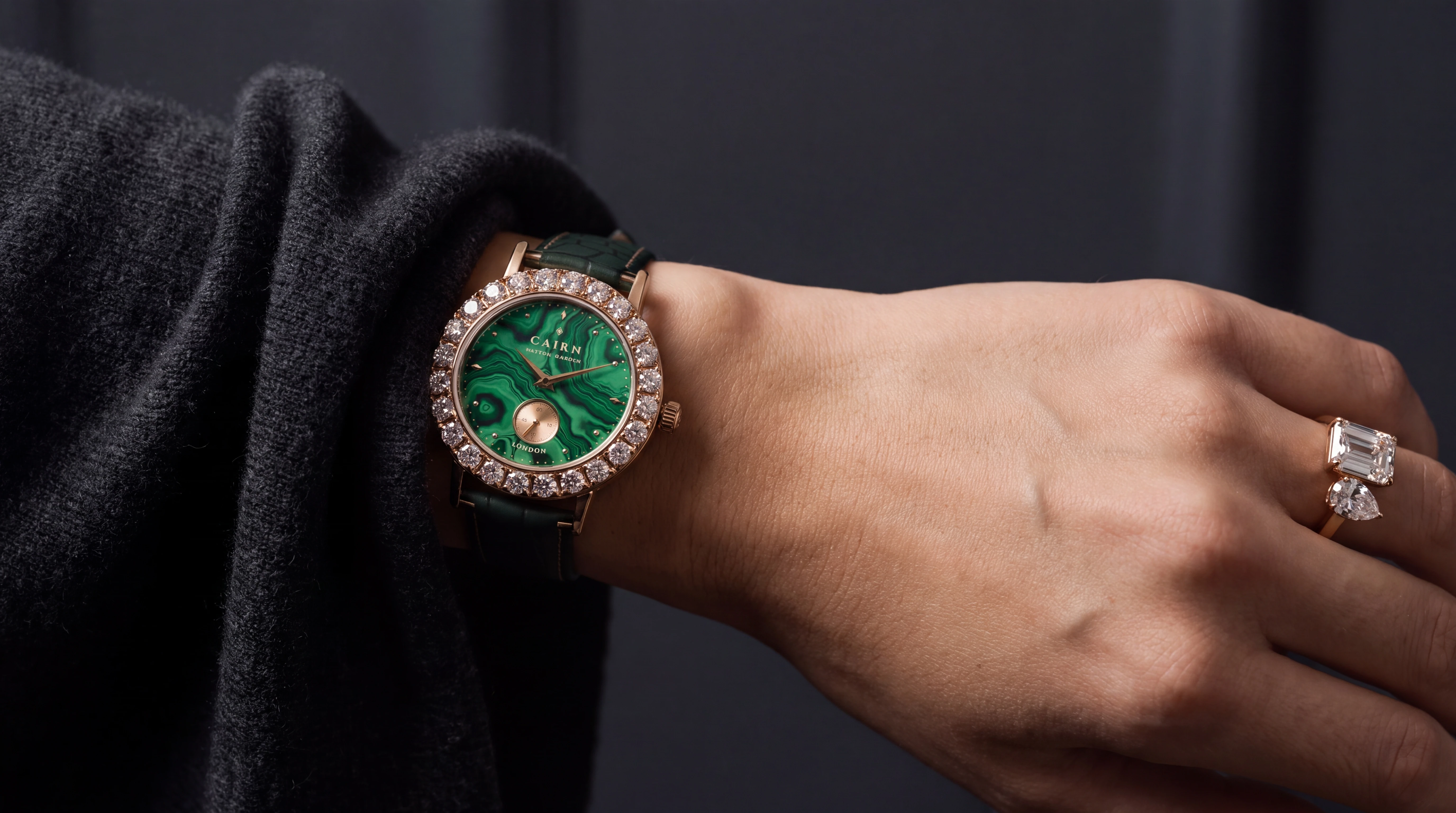
Malachite and rose gold with a Toi et Moi ring.
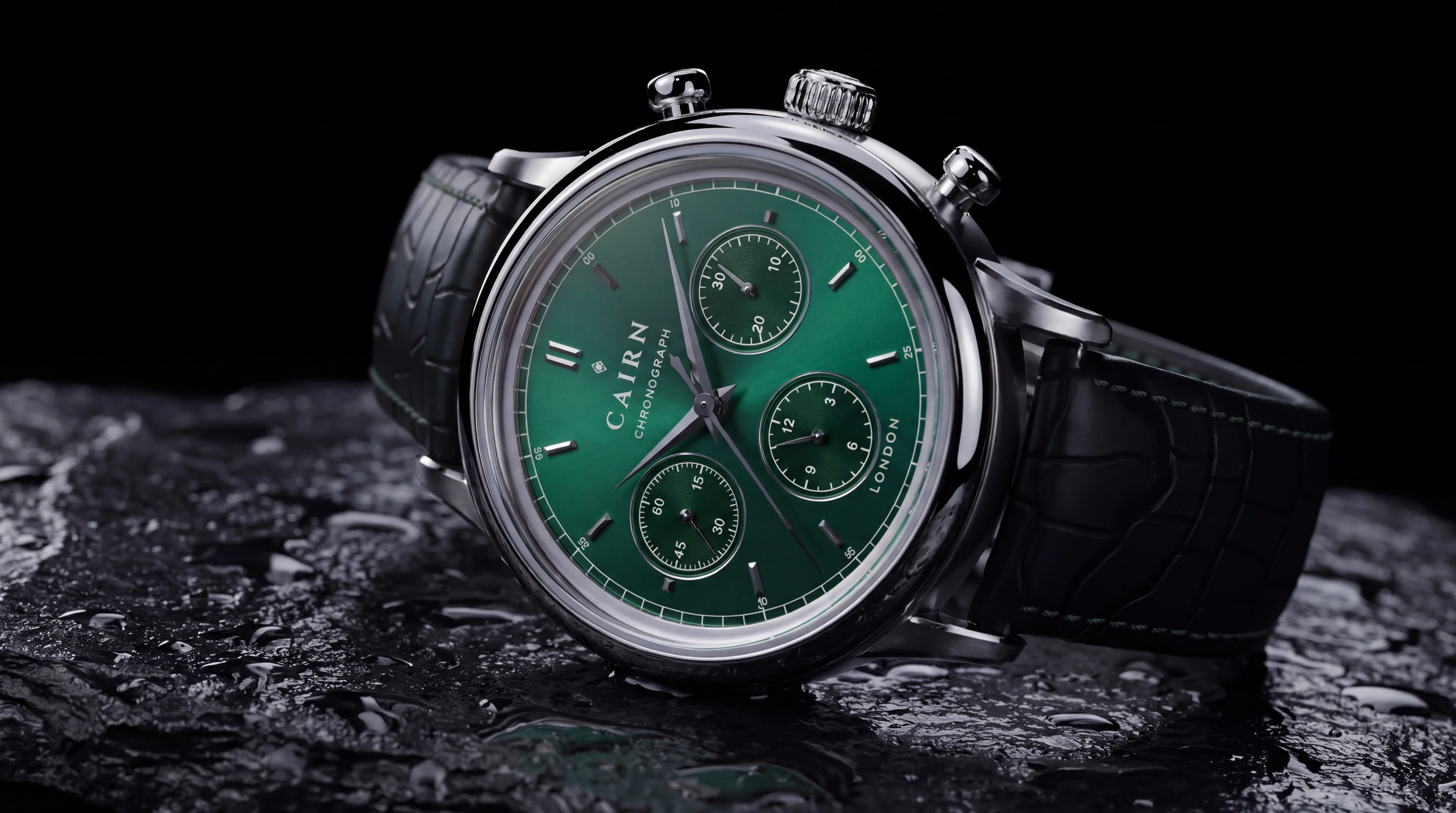
Platinum and Highland emerald against wet slate.
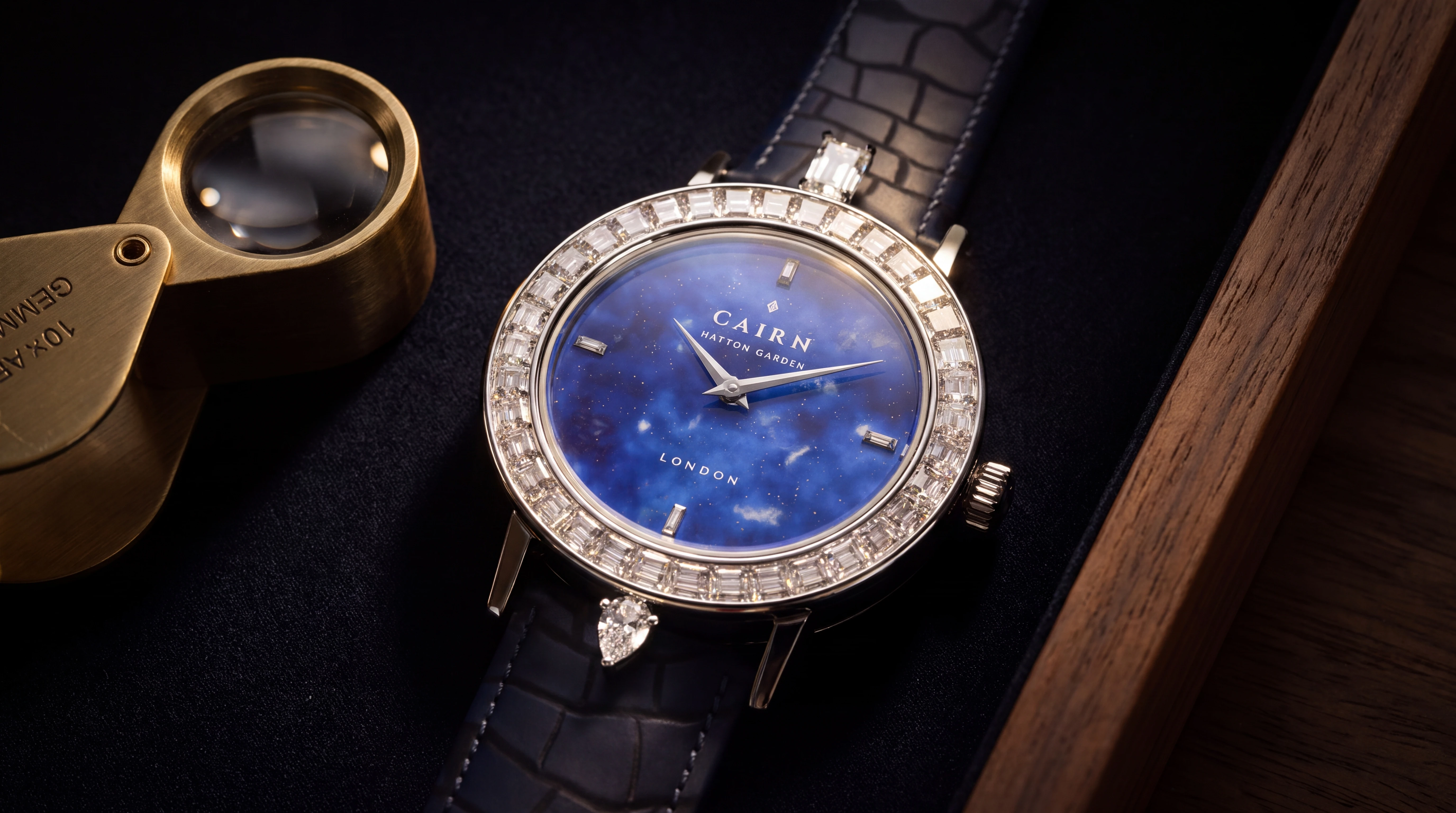
Lapis and tapered baguettes on a Hatton Garden tray.
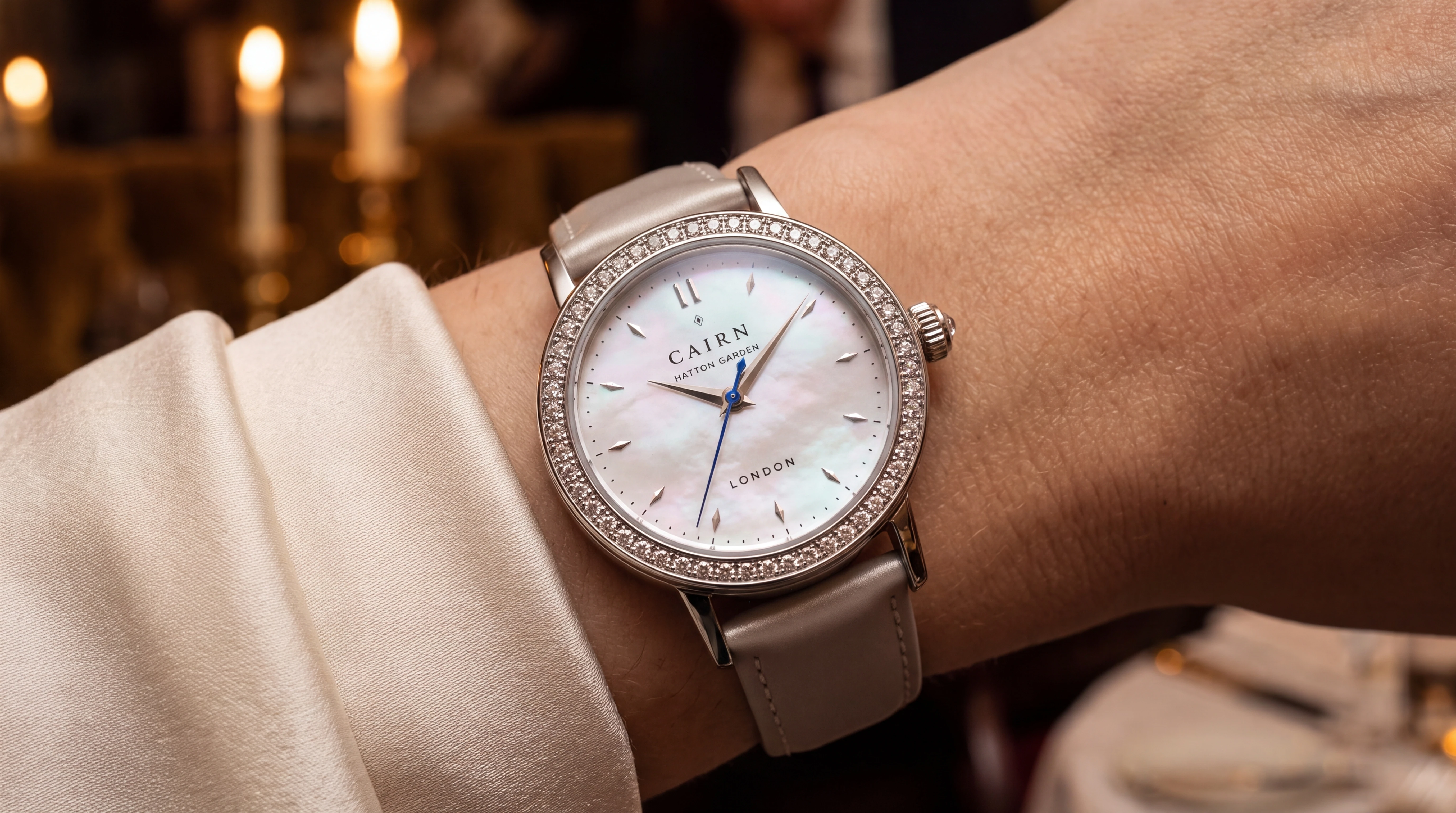
White mother-of-pearl at the edge of an ivory cuff.
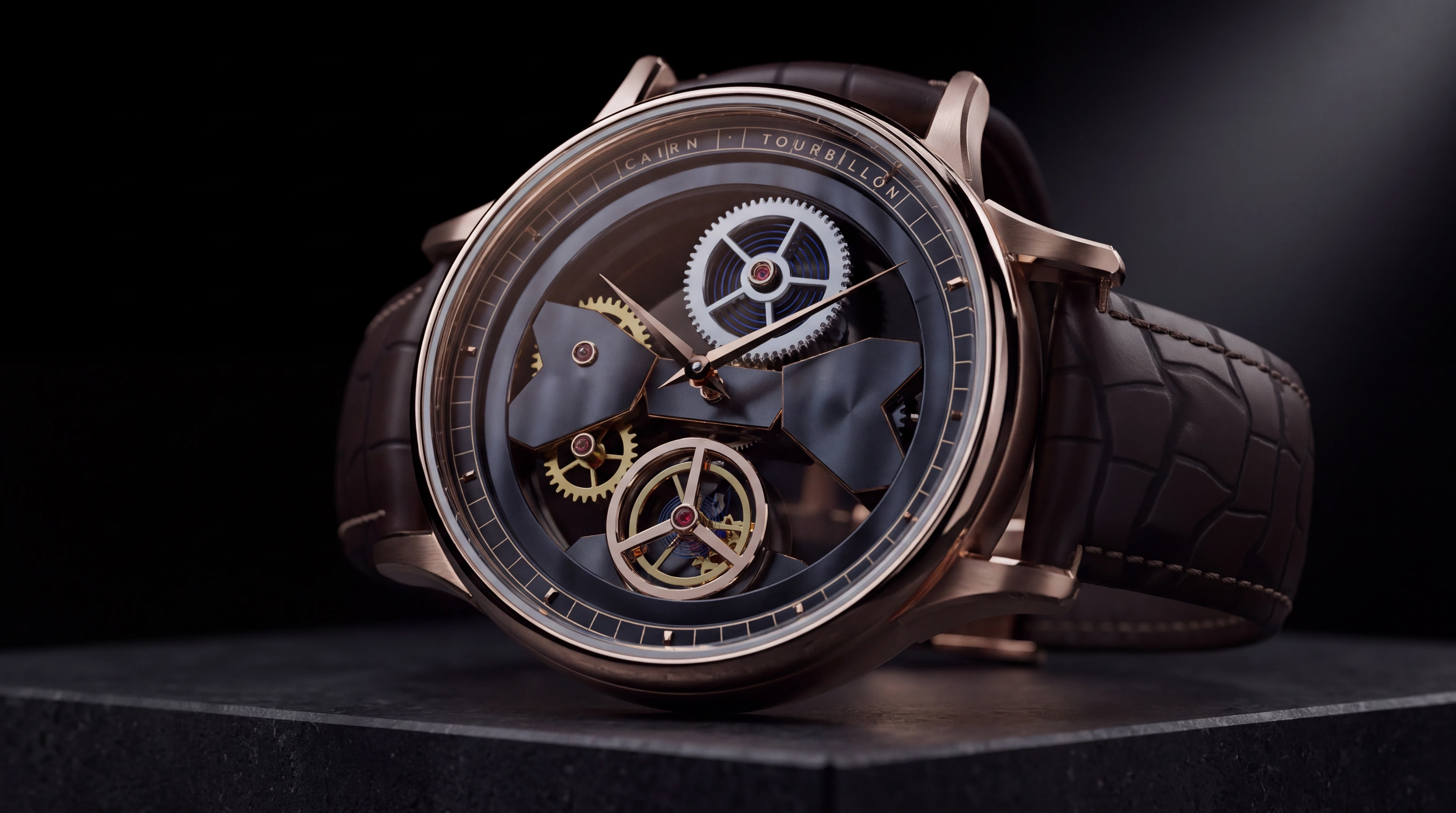
An openworked tourbillon above a dark stone plinth.
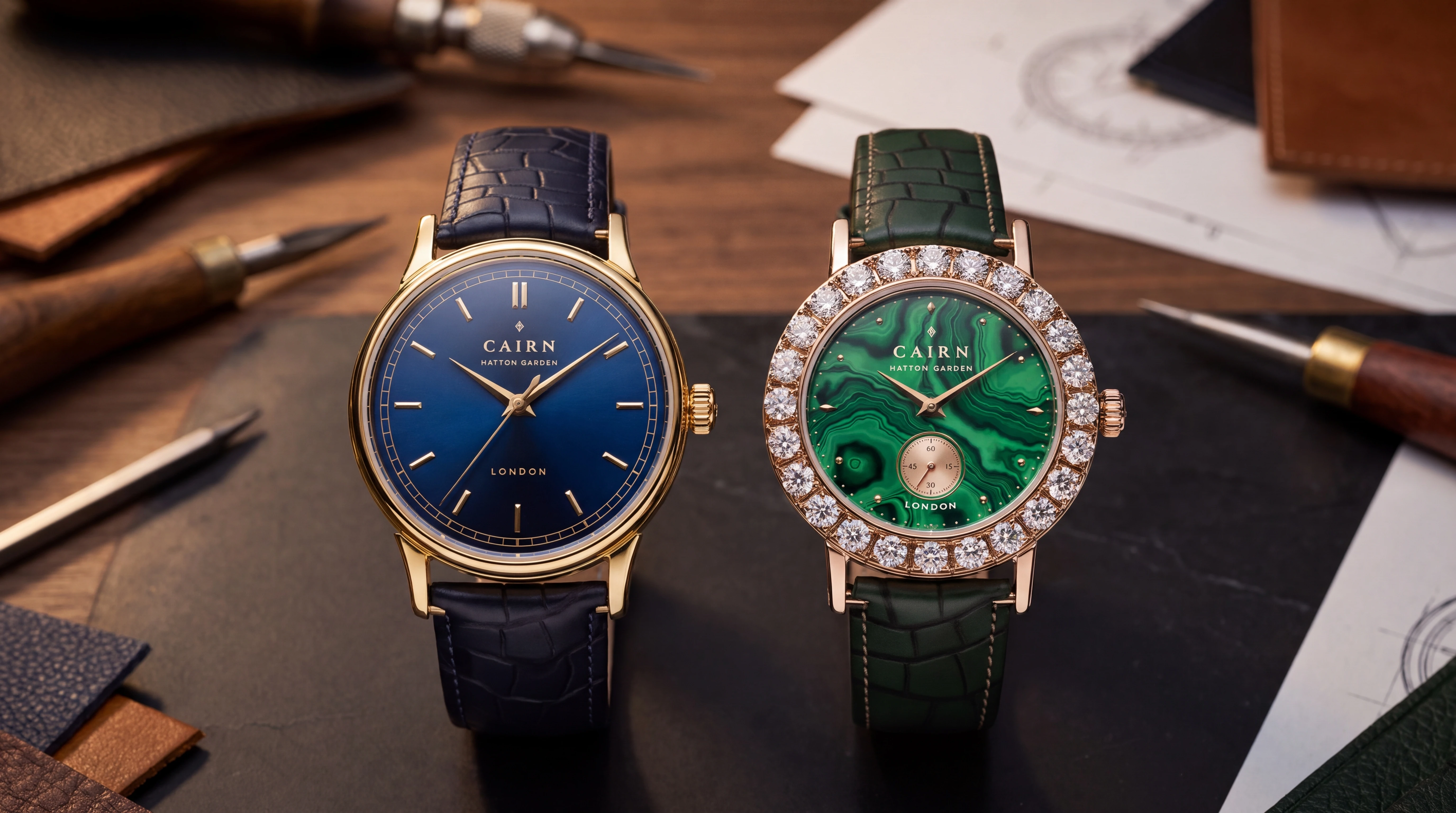
Two case proportions, paired in the London salon.
Commercial study · November 2026
Smaller cases change the bullion bill. Diamond setting changes the cost that follows.
Isla uses 67.0% less yellow gold than Waymark. Its first-batch gross margin is 40.6% against Waymark’s 46.4%.
| Watch | Case | Bullion¹ | Retail² | GM |
|---|---|---|---|---|
| Trig | 61.8 g | £4,948 | £32,000 | 46.7% |
| Waymark | 91.2 g | £7,307 | £48,000 | 46.4% |
| Tor | 56.9 g | £4,560 | £70,000 | 52.0% |
| Tarn | 28.0 g | £2,244 | £23,250 | 40.8% |
| Isla | 30.1 g | £2,412 | £35,250 | 40.6% |
| Alba | 33.7 g | £2,704 | £51,000 | 44.7% |
¹ Including casting loss, ex VAT. ² UK retail including 20% VAT. Gross margin uses sales ex VAT.